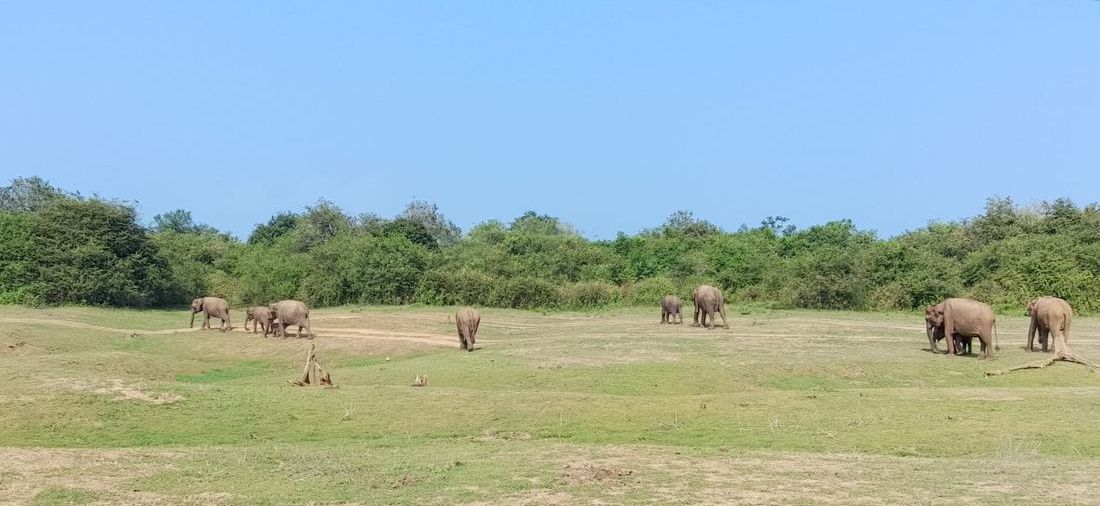
What is the best time of year for a Udawalawe safari?
Any of them, which is the whole point of Udawalawe. Around 700 elephants live inside the park permanently, so unlike Minneriya or Kaudulla there is no gathering season to wait for and no month when the herds walk off somewhere else. If you want a slight edge, May to September is drier and the elephants concentrate around the reservoir, which makes them easier to find. December and January are greener and better for photographs.
Udawalawe or Yala — which should I book?
Book Udawalawe for elephants and Yala for leopards. Udawalawe is smaller, much less crowded, and its elephants are resident and relaxed, so you get close without a queue of twenty jeeps around one animal. Yala has the higher leopard density, but a sighting is still a lottery and the park can be a traffic jam in season. If you want a near-certain elephant encounter and a calmer drive, come here. If you are set on a leopard, go to Yala and accept the odds.
How much does a Udawalawe jeep safari cost?
A seat in a shared jeep starts at €25 per person for a 3-hour drive; a private jeep starts at €60 for the whole vehicle, up to six people. Park entrance tickets are separate and set by the Department of Wildlife Conservation — about €30 per adult and €15 per child, including service charge and VAT. You can add tickets at checkout so there is nothing to pay at the gate. Food and drinks are not included on any safari, and an English-speaking safari guide is an optional LKR 4,000.
What is the difference between a sharing and a private jeep?
In a sharing jeep you buy a seat and travel with up to five other guests, which keeps the cost down. In a private jeep the whole vehicle is yours — you set the pace, stop where you want, and the driver works to your photography rather than to a group. Private is the better call for families, photographers and anyone who wants a specific pickup time.
Where do we meet, and is pickup free?
Pickup is free within about 5 km of Udawalawe town, which covers most hotels and guesthouses there. If you would rather drive yourself, we meet at the park entrance on Thanamalvila Road — there is a map and a one-tap directions button further up this page, and parking at the gate is free. Ella, Tissamaharama, Embilipitiya, Mirissa and anywhere further out carry a transfer charge worked out from the distance. Pick your location in the booking form and we confirm the figure in writing before you pay anything.
Is my booking confirmed immediately?
Yes. The moment your card payment clears, the system issues a booking reference and sends your permit to your email and your WhatsApp — usually inside a minute. There is no waiting for someone to reply. The evening before your safari, your driver messages you his name, the jeep's plate number and the exact pickup time.
Is food or drink provided?
No. Food and drinks are not included on any of our safaris, including the full day and the two-park combo. Bring water and something to eat — a 3-hour drive in the dry zone is thirsty work, and 10 hours certainly is. Tell your driver at pickup and he will stop somewhere you can buy supplies before the gate.
What does the safari guide add, and do I need one?
Your driver is an experienced tracker who finds the animals and knows the park's moods. A safari guide is a separate English-speaking naturalist who rides with you and talks you through what you are seeing — species names, behaviour, the history of the tank. It costs LKR 4,000 for the guide, whatever the size of your group. Most guests skip it; birders and photographers usually take one.
What is the Elephant Transit Home, and is it worth adding?
It is a government-run facility a few minutes from the park where orphaned and injured elephant calves are raised and then released back into the wild — unlike an orphanage where the animals stay for life. You watch the milk feeding from a viewing platform; there is no riding, no bathing and no touching, which is exactly why we are happy to send guests there. Feedings are at 10:30, 14:30 and 18:00. The combo package puts the morning drive and the 10:30 feeding together in one trip, and it is the one families with children remember.
Will I definitely see elephants?
Close to it. Around 700 elephants live inside Udawalawe permanently and the park is open grassland rather than thick forest, so they are visible rather than hidden. In practice almost every drive finds them, often within the first twenty minutes. We will not put that in writing as a guarantee, because they are wild animals and anyone who does guarantee it is overselling — but if there is one park in Sri Lanka where you can reasonably expect elephants, this is it.
Can I cancel or change the date?
Cancel more than 24 hours before pickup and you get a full refund to the original card, usually within five working days. Inside 24 hours we refund half. Date changes are free at any time, subject to availability. If the park closes or the drive is cancelled by weather, you choose between a full refund and a free reschedule.
What animals will I see besides elephants?
Elephants are close to guaranteed. Beyond them, expect water buffalo, spotted deer, sambar, wild boar, golden jackal, toque macaques, land monitors and mugger crocodiles along the reservoir and the Walawe river. Udawalawe is also a serious birding park with around 200 species, including the changeable hawk-eagle, crested serpent eagle, Malabar pied hornbill, bee-eaters and the endemic Sri Lanka junglefowl. Leopard and sloth bear live here, but sightings are very rare and nobody should promise you one. If you want the birds named as you go, add a safari guide at checkout.
Is the safari safe for children and older travellers?
Yes. The tracks are rough but the drive is slow, and our jeeps have seat belts, a roll bar and a raised roof for shade. Children under six travel free on a parent's lap. Tell us in the booking notes if you need a child seat, step assistance or a wheelchair-accessible vehicle and we will arrange it.
How close do the jeeps get to the elephants?
Close enough to fill a frame with a 200 mm lens, and no closer. Our drivers keep a respectful distance, never block a herd's path to water, and switch the engine off rather than chase a sighting. Crowding elephants is how animals get stressed and people get hurt — we don't do it, and we will say so if another jeep does.